
Gold 101: Why 9k, 14k, and 18k are so different
When choosing fine jewelry, gold is often treated as a given. But not all gold is the same and the difference affects how a piece looks, feels, and lives with you over time. If you’ve ever wondered what those “K” numbers actually mean, this guide is for you!
What does “K” mean in gold?
The “K” in gold stands for karat, and it tells you how much pure gold is inside a piece of jewelry.
Because pure gold is very soft, it’s usually mixed with other metals to make it wearable in everyday life. The lower the karat, the more other metals are added. This is why two gold rings can look similar at first glance, but feel completely different once worn.
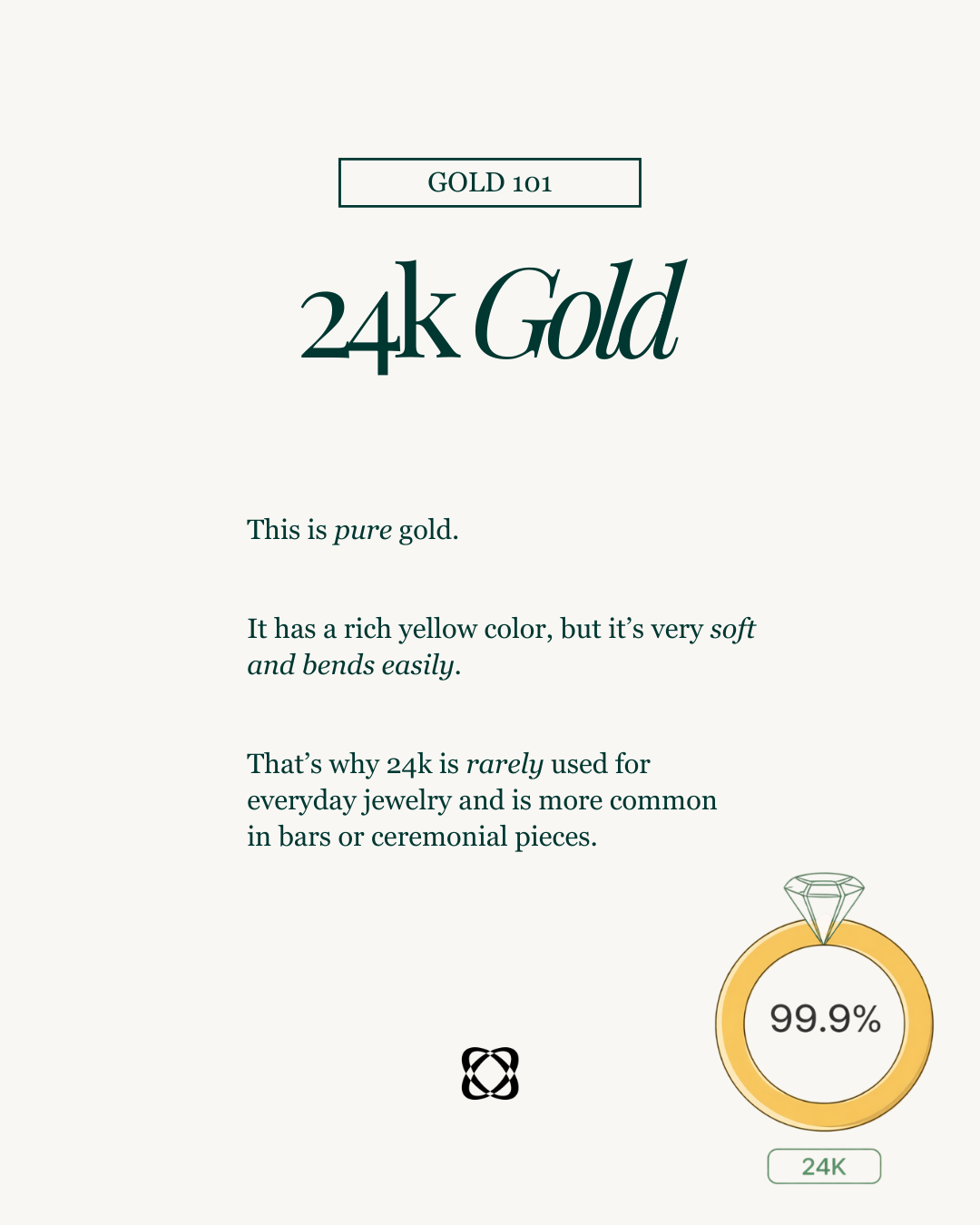
24k Gold: Pure, but not practical
24k gold is 100% pure gold.
It has a rich, deep yellow color that many people associate with “real gold.” However, because it’s so pure, it’s also extremely soft. It bends easily, scratches quickly, and doesn’t hold its shape well over time.
For this reason, 24k gold is rarely used in everyday fine jewelry. You’ll most often see it in gold bars or cultural and ceremonial pieces that aren’t meant to be worn daily.
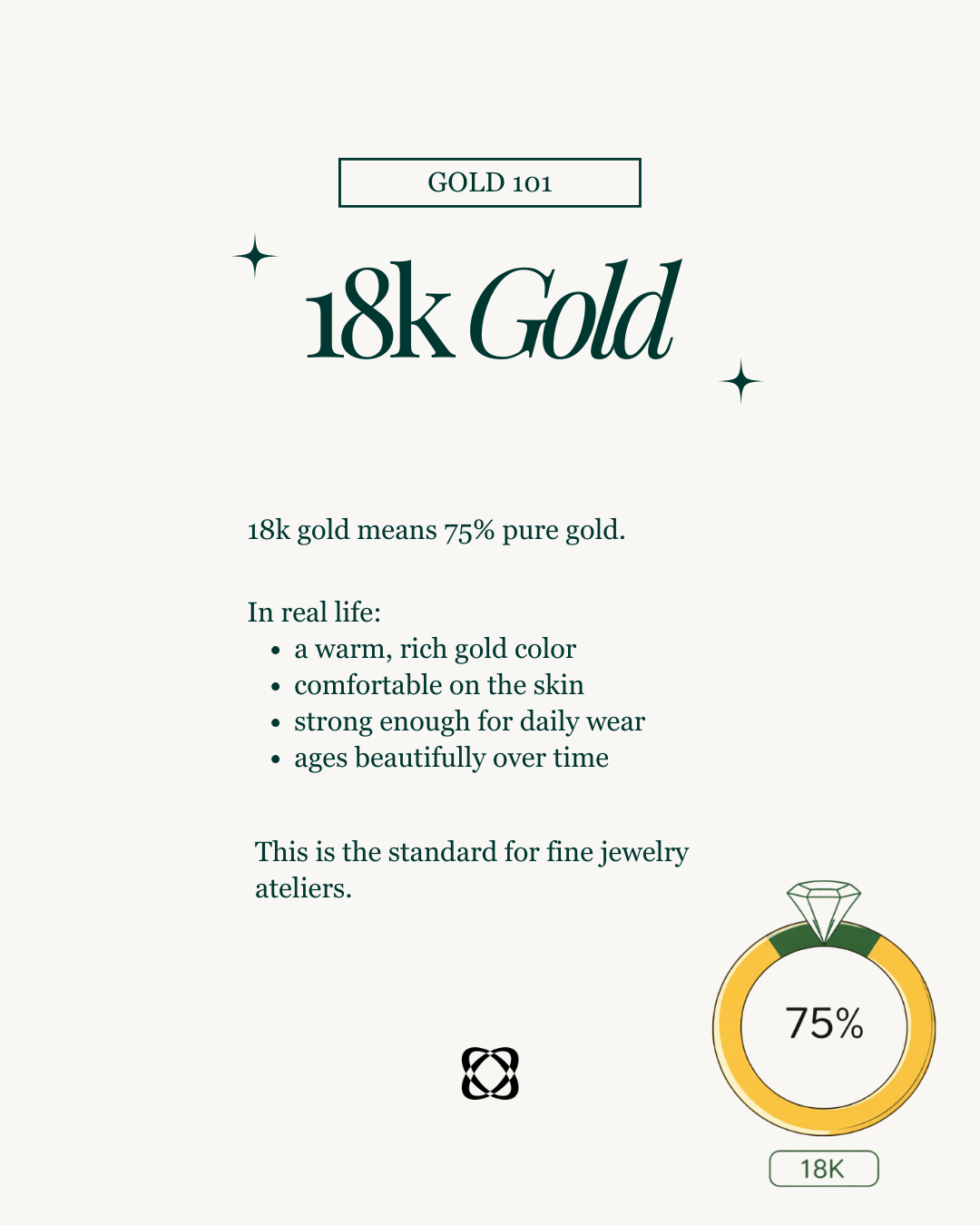
18k Gold: The fine jewelry standard
18k gold contains 75% pure gold.
In real life, this means a warmer, richer color, a luxurious feel on the skin, and enough strength to be worn every day. It ages beautifully, developing character rather than simply wearing down.
This balance is why 18k gold has long been the standard in fine jewelry ateliers across Europe. It offers the best combination of beauty, comfort, and longevity — especially for pieces meant to last a lifetime, like engagement rings or heirloom jewelry.
14k Gold: Practical and widely used
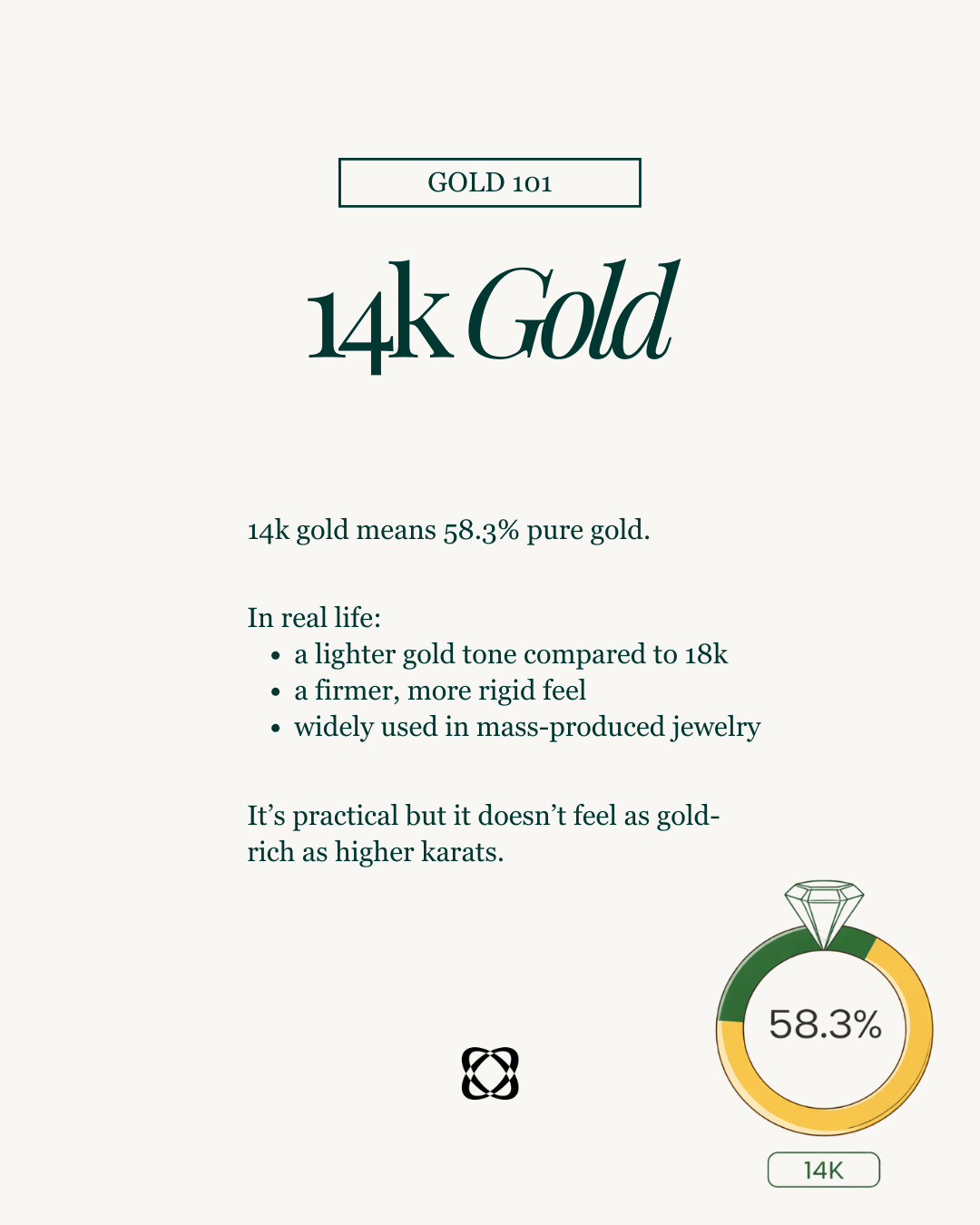
14k gold contains 58.3% pure gold, with the rest made up of strengthening metals.
Because of this, it feels firmer and slightly lighter in color than 18k gold. It’s very resistant to knocks and scratches, which is why it’s commonly used in mass-produced jewelry, especially in the U.S.
While practical, 14k gold doesn’t have the same warmth or gold-rich appearance as higher karats. Over time, many people notice the difference both visually and emotionally.
9k Gold: Lower gold content, different experience
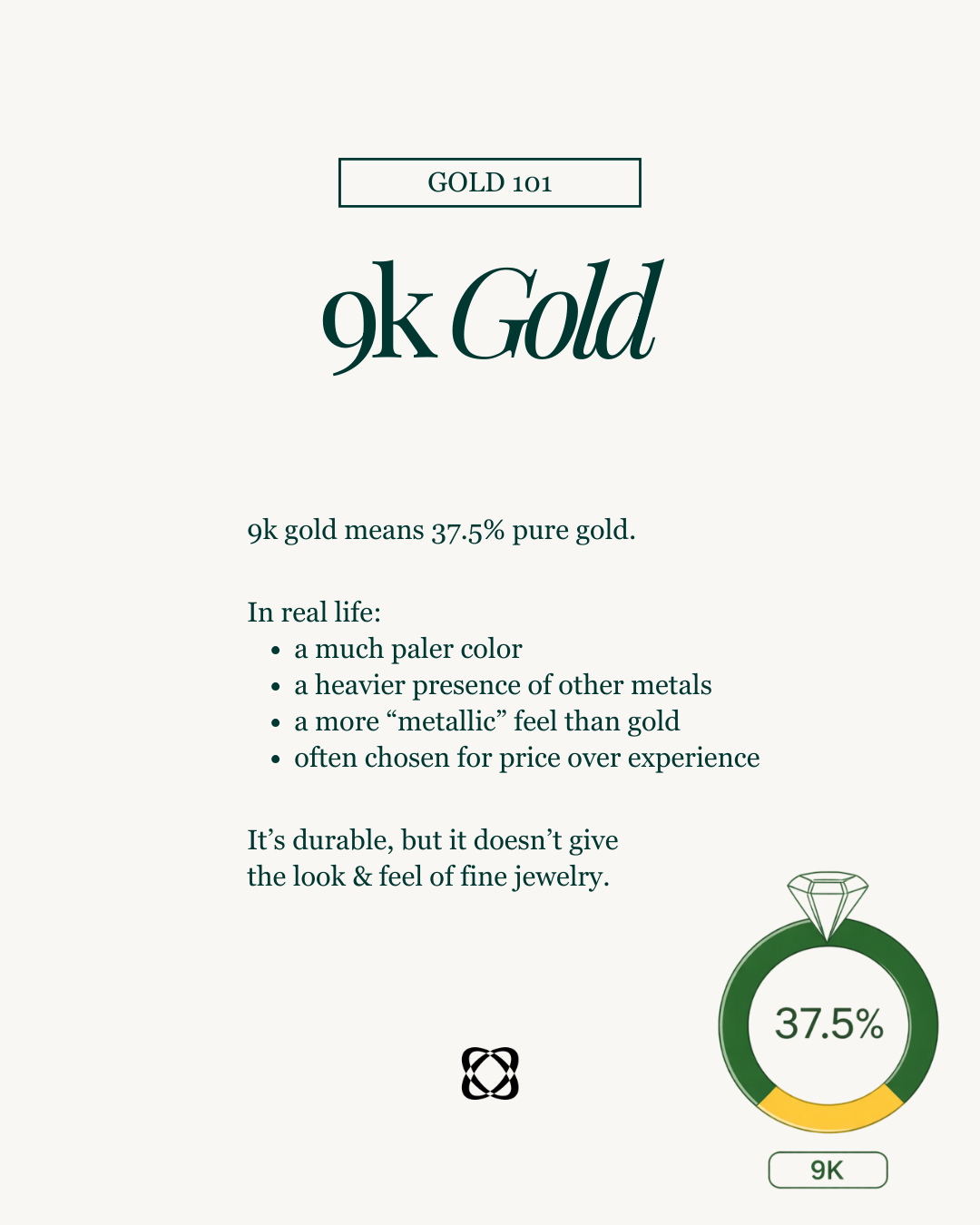
9k gold contains 37.5% pure gold.
With a higher percentage of other metals, it has a paler tone and a more metallic feel. It’s durable and often chosen for its lower price point, but it doesn’t offer the same look or wearing experience as fine jewelry gold.
For pieces meant to be worn occasionally, it can make sense. For jewelry intended to stay with you for years, the difference becomes noticeable.
What about gold-plated jewelry?
Gold-plated jewelry is not solid gold.
It consists of a very thin layer of gold applied over another metal. Over time, that gold layer wears off, revealing the metal underneath.
Gold-plated and vermeil pieces are great for fashion jewelry and trend-driven designs, but they are not considered fine jewelry and are not made to last a lifetime.
Why gold choice matters
The gold you choose affects how your jewelry looks over time, how it feels on your skin, and how naturally it becomes part of your everyday life.
Some pieces are designed to last a season. Others are meant to stay with you.
Where VONA Stands
That’s why at VONA, every piece is crafted exclusively in 18k gold — a choice rooted in longevity, comfort, and the belief that fine jewelry should age with you, not need replacing.
